Mesotherapy was developed by the French physician Dr Michel Pistor in 1952 as a method of delivering medicine directly to specific tissues. In aesthetic medicine, mesotherapy is used to inject a cocktail of vitamins, minerals, amino acids, hyaluronic acid and peptides directly into the middle layer of the skin (the dermis).
Why direct injection?
Many active ingredients in skincare serums have difficulty penetrating the skin's barrier (the stratum corneum). Through direct injection, the concentration in the skin can be 10–100 times higher than is possible with topical application[1]. This makes mesotherapy particularly effective for:
- Hydration at a cellular level
- Improving skin quality
- Free-radical protection
- Stimulating collagen synthesis
What does a typical mesotherapy cocktail contain?
- Hyaluronic acid – non-cross-linked, for deep hydration
- Vitamin C – antioxidant and collagen-stimulating
- B vitamins – cell renewal
- Amino acids – building blocks for collagen
- Minerals – cofactors for enzyme reactions
- Glutathione – powerful antioxidant and skin lightener
- Coenzyme Q10 – cellular energy and anti-ageing
- Peptides – signalling molecules for collagen production
The formula is tailored to individual needs.
What does the treatment involve?
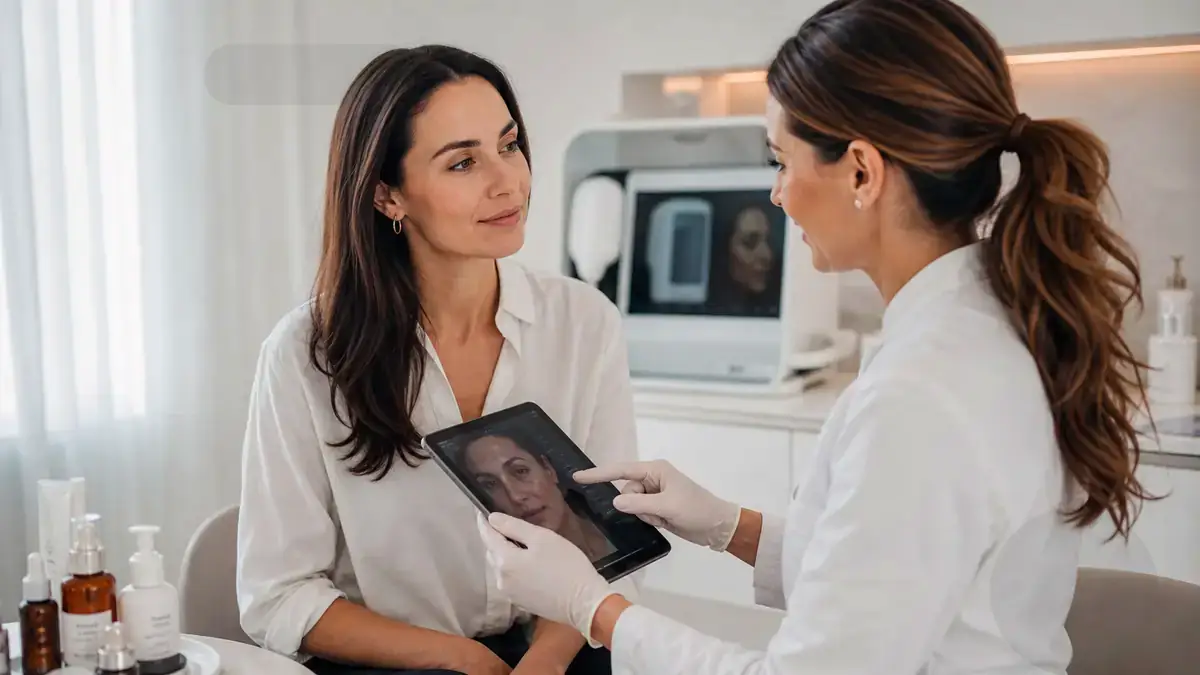
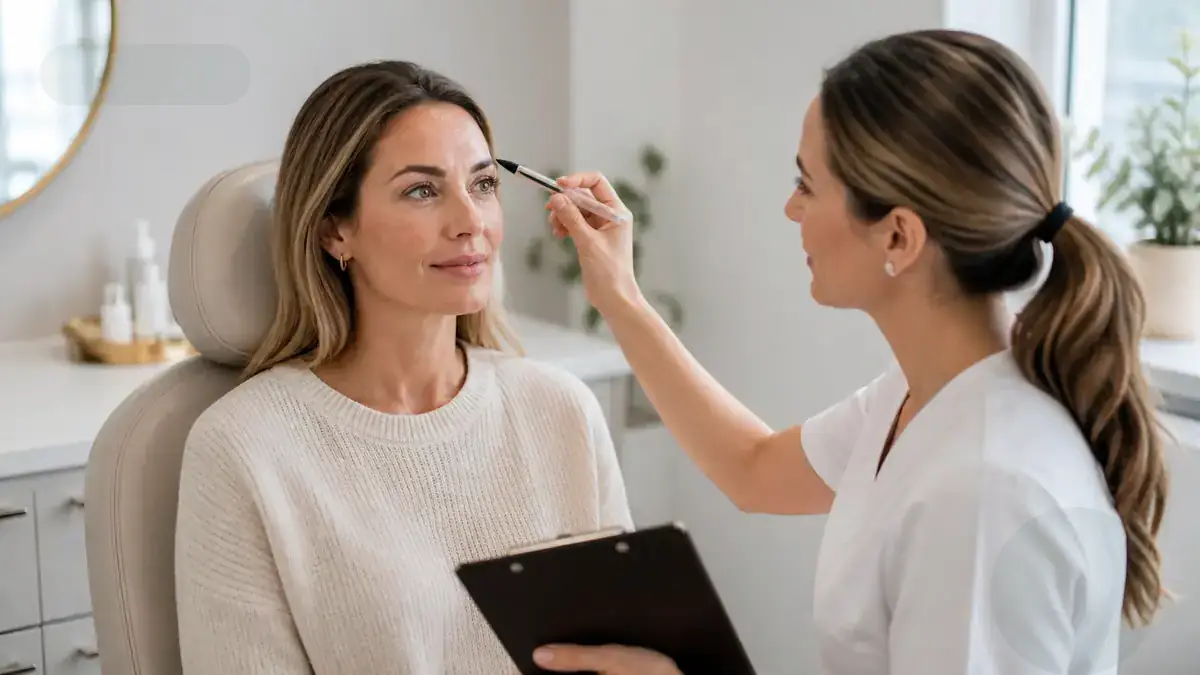
- Consultation – goals and skin assessment
- Cleansing of the area
- Numbing cream (usually)
- Microscopic injections in a regular pattern over the whole face (or other areas)
- Soothing mask
The whole procedure takes 30–45 minutes.
Two techniques
Manual mesotherapy
The practitioner uses a very fine needle and injects small amounts of the cocktail at each injection point. More control, but it takes longer.
Pistol/gun mesotherapy
An automated mesotherapy gun that creates consistent injection points. Faster, and usually causes less discomfort.
Which areas and problems are treated?
Face
- Dull and tired complexion
- Fine lines
- Uneven pigmentation
- Prevention of ageing
Neck and décolletage
Commonly combined with a facial treatment, as these areas often show age-related changes.
Hands
To restore the skin's firmness and hydration – one of the most "visible" signs of ageing.
Scalp
Mesotherapy for hair loss contains vitamins and peptides that stimulate the hair follicle. Often combined with PRP.
Body
"Lipolytic" mesotherapy cocktails are sometimes used to reduce localised fat deposits (disputed and not well supported scientifically).
Treatment protocol
For optimal effect, the following is recommended:
- Intensive phase: 4–6 sessions, 1–2 weeks apart
- Maintenance: 1 session every 4–8 weeks
The result is gradual – most people notice an improvement after 3–4 sessions.
Risks and side effects
Common and transient:
- Small bumps and redness (24–48 hours)
- Mild tenderness
- Small bruises
- Temporary swelling
Rare:
- Allergic reaction to any of the ingredients
- Infection (if sterility is inadequate)
- Hyperpigmentation
Mesotherapy is not recommended during pregnancy or breastfeeding, or in cases of autoimmune disease or hypersensitivity to the ingredients.
Mesotherapy vs Profhilo vs skin booster
| Property | Mesotherapy | Profhilo | Skin booster (Restylane Vital) |
|---|
| Contents | Cocktail of vitamins + HA | High-concentration HA | Cross-linked HA |
| Injection points | Many (20–50) | 10 (BAP technique) | Many (20+) |
| Effect | Hydration + nourishment | Bioremodelling | Hydration |
| Sessions | 4–6 initially | 2 initially | 3–4 initially |
| Duration | 4–8 weeks per session | 6–9 months | 4–6 months |
Is mesotherapy scientifically proven?
Mesotherapy for skin rejuvenation has a good empirical basis but relatively few randomised clinical trials compared with, for example, fillers or botox. Research does, however, show positive effects on skin hydration, elasticity and appearance with regular treatment[2].