A common question before treatment is: "do fillers hurt"? The short answer: yes, a little — but most people describe it as mild to moderate pain, no worse than getting an injection at the dentist. With the right anaesthetic, it is usually well tolerated.
Do fillers hurt — it depends on the area
- Lips: most sensitive — 3–4/10 pain with anaesthetic
- Cheekbones: moderate — 2–3/10
- Chin: mild — 2/10
- Nasolabial lines: mild — 2/10
- Nose: mild — 1–2/10 (more pressure than pain)
- Tear troughs: moderate — 3/10
What does the clinic do to reduce the pain?
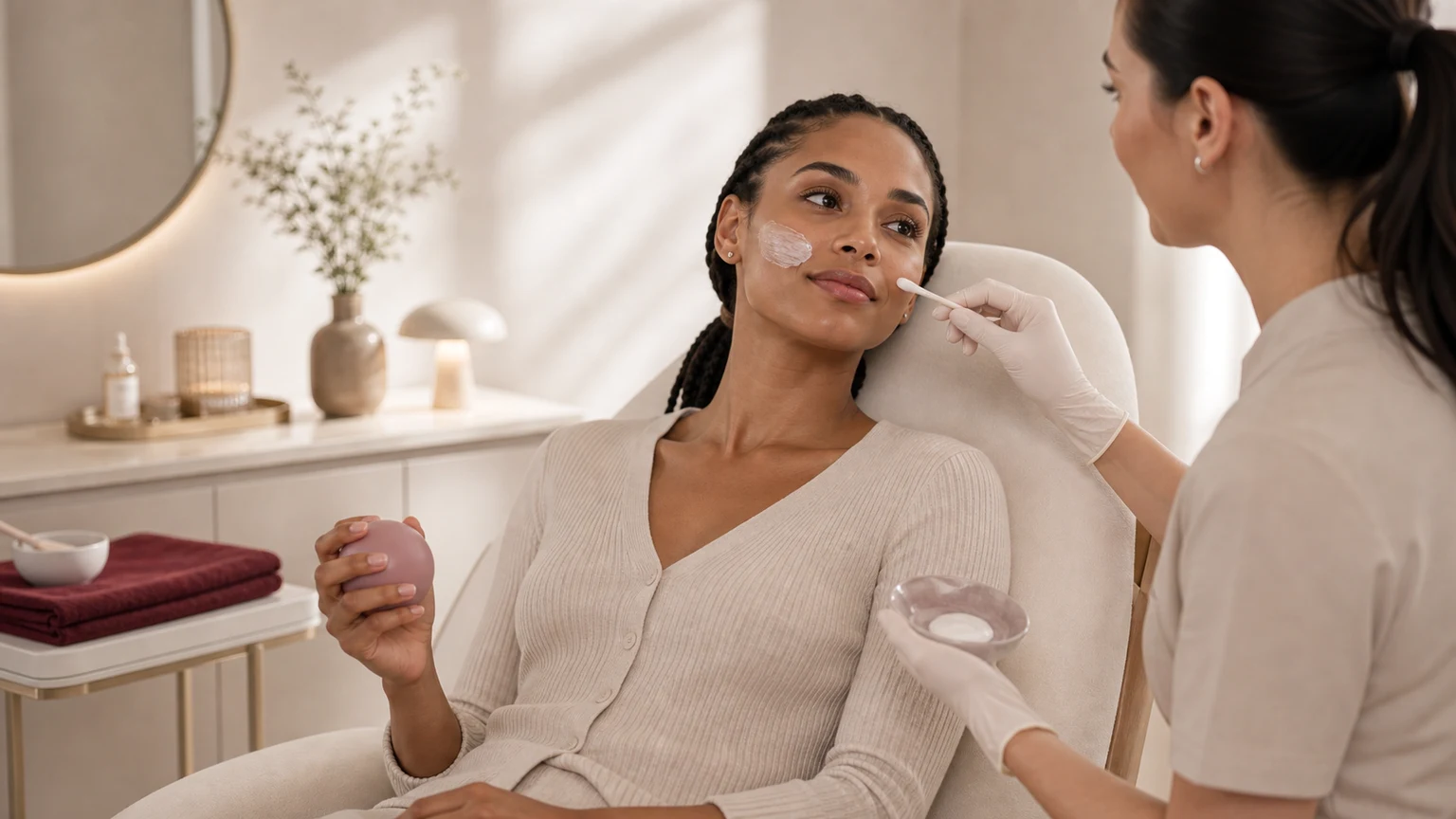
1. Numbing cream (EMLA or similar)
Applied 20–30 minutes before the treatment. Significantly reduces the pain of the needle prick itself.
2. Anaesthetic in the product
Most modern fillers contain lidocaine — a local anaesthetic directly in the product. You feel a slight sting at the first prick, then the area quickly becomes numb.
3. Microcannula instead of a needle
For some treatments (cheekbones, tear troughs), a blunt microcannula is used instead of a needle. Less pain and less risk of bruising.
4. Ice or cooling
Clinics sometimes use cooling before or during the treatment for extra numbing.
5. Dental block (lip fillers)
For lip fillers, a dentist-style anaesthetic can be used to make the treatment completely pain-free.
What does it feel like during the treatment itself?
- A brief sting from the needle tip
- Pressure as the product is injected
- Slight burning for 1–2 seconds
- After a few pricks, it goes quickly
The whole lip filler treatment takes 15–30 minutes.
How does it feel afterwards?
Common side effects during the first 3–7 days are:
- Swelling
- Slight tenderness to the touch
- Bruising (most common with lips)
- Tightness
These are normal and resolve without treatment.
How can you minimise the pain?
- Ask for numbing cream beforehand
- Choose a clinic that uses lidocaine fillers
- Avoid alcohol for 24 hours before (reduces sensitivity)
- Avoid ibuprofen / aspirin for 3 days before (reduces the risk of bleeding)
- Eat and drink normally — an empty stomach can make you unsteady
- Relax — a tense muscle makes the pain worse
Summary
Yes, fillers hurt a little — but with modern anaesthesia it is well tolerated. Lip fillers are the most sensitive. Choose an experienced clinic and ask about all the anaesthetic options.
Recommended filler clinics in Stockholm
Filler clinics in Stockholm on Skönhetskollen:
- Nordic Glow Clinic — Stockholm ★ 4.8 · 6 reviews
- Editorial Clinique — Stockholm
- Golden Fox Beauty — Stockholm
- Vanias Beauty Kungsholmen — Stockholm
See all filler clinics in Stockholm →
Recommended filler clinics in Gothenburg
Filler clinics in Gothenburg on Skönhetskollen:
- Studio Z Mölndal — Gothenburg
See all filler clinics in Gothenburg →
Compare filler clinics in your city
Skönhetskollen lists clinics throughout Sweden. Find the right clinic in your city:
- Fillers Stockholm
- Fillers Gothenburg
- Fillers Malmö
- Fillers Uppsala
- Fillers Helsingborg
- Fillers Linköping
Related articles
- Filler side effects
- When do you see results after fillers?
- Lip filler prices
- How much filler do you need?
Compare prices & clinics with confidence
Use Skönhetskollen's comparison tool to find filler clinics with price information and IVO status.
Day-by-day timeline
| Time | What happens | What you can do |
|---|---|---|
| –7 days | Preparation | Avoid ibuprofen/aspirin, fish oil, alcohol |
| Before treatment | Consultation and statutory cooling-off period | Ask questions, sign consent |
| Day 0 | Treatment | Avoid make-up, eat a light meal beforehand |
| +4 h | Swelling begins | Do not lie flat, do not touch the area |
| +24 h | Maximum swelling possible | No exercise, sauna or alcohol |
| +3 days | Swelling subsides | You can carefully resume your normal routine |
| +7 days | Interim assessment | Massage lumps as instructed |
| +14 days | Final result visible | Follow-up check + any touch-up |
| +2 months | Stable result | Avoid professional massage |
| +3–6 months (Botox) +6–12 months (fillers) | Effect wears off | Book a top-up in good time |
7 questions you must ask at the consultation
- "Can I see your IVO registration and your licence?" — Mandatory for a reputable clinic.
- "Which product do you use, and can I see the packaging?" — Approved in Sweden?
- "Exactly how much product do you recommend, and why?" — There should be a justification.
- "What is included in the price — consultation, follow-up, touch-up?" — Everything in writing.
- "Do you have hyaluronidase on site?" — Safety equipment (applies to fillers).
- "What is your policy if I am not satisfied?" — Free touch-up within X weeks?
- "Which acute symptoms should I contact you about?" — A trained practitioner explains clearly.
Expert tips — how to maximise the result
- Hydration: Drink 2 litres of water a day for 2 weeks before and after — hyaluronic acid binds moisture.
- Sleep: 7–9 hours helps healing and reduces swelling.
- Sun protection: SPF 30+ daily — UV breaks down filler faster.
- Stopping smoking: Even temporarily — nicotine impairs healing.
- Moderate exercise: Resume after 48 hours, full exercise after 1 week.
- Keep your head raised: For the first 4 hours — reduces diffusion of Botox.
- No facial massage for 2 weeks: Avoid professional beauty treatments.