A chemical peel is a skin treatment in which a chemical solution is applied to the skin to remove dead skin cells and stimulate regeneration. The technique has been used in skincare since antiquity (Cleopatra bathed in milk for its lactic acid), but modern formulations are considerably more refined and effective.
How does a chemical peel work?
The active substance causes the skin's top layer to detach in a controlled way. This triggers a healing process that leads to:
- Regeneration of the epidermis (the skin's outermost layer)
- Stimulation of collagen production in the dermis
- Improved skin texture and pigmentation
- Reduced wrinkle formation
Three depths of peel
Superficial peel (epidermis)
Active substances: AHA (glycolic acid, lactic acid, mandelic acid), salicylic acid (BHA)
Treats: Mild sun damage, skin texture, dull complexion, mild acne
Recovery: 1–3 days with possible flaking
Sessions: 4–6, 2–4 weeks apart
Medium-depth peel
Active substances: TCA (trichloroacetic acid) 15–35%, Jessner's solution, combination peels
Treats: Moderate sun damage, superficial wrinkles, acne scars, hyperpigmentation
Recovery: 5–10 days with visible flaking
Sessions: 2–4
Deep peel
Active substance: Phenol-based peels
Treats: Deep wrinkles, severe sun damage, scars
Recovery: 2–4 weeks, requires medical supervision
Sessions: Usually 1 (a one-off treatment)
Deep peels are rarely performed in Sweden today and often require general anaesthesia.
The most common peels in Sweden
PRX-T33
A revolutionary "biorevitalising peel" that combines TCA 33% with hydrogen peroxide and kojic acid. The unique formulation penetrates the skin without causing peeling on the surface – no recovery is required. Stimulates fibroblasts and collagen.
Results: Improved skin texture, radiance and firmness without flaking.
Jessner peel
A classic medium-depth peel that combines resorcinol, lactic acid and salicylic acid in ethanol. Effective against acne scars, hyperpigmentation and sun damage[1].
TCA peel
Trichloroacetic acid in concentrations from 10–35%. Adaptable to different needs – from superficial skin renewal to medium-depth treatment. Safe and well proven since the 1970s.
Glycolic acid peel
The least aggressive, perfect for a first experience. Most common in at-home skincare and as a "lunch peel".
Which skin problems are treated?
- Skin texture and pores
- Acne and acne scars
- Hyperpigmentation (melasma, sun spots)
- Fine lines and wrinkles
- Sun damage
- Dull complexion
- Stretch marks (less common)
What does the treatment involve?
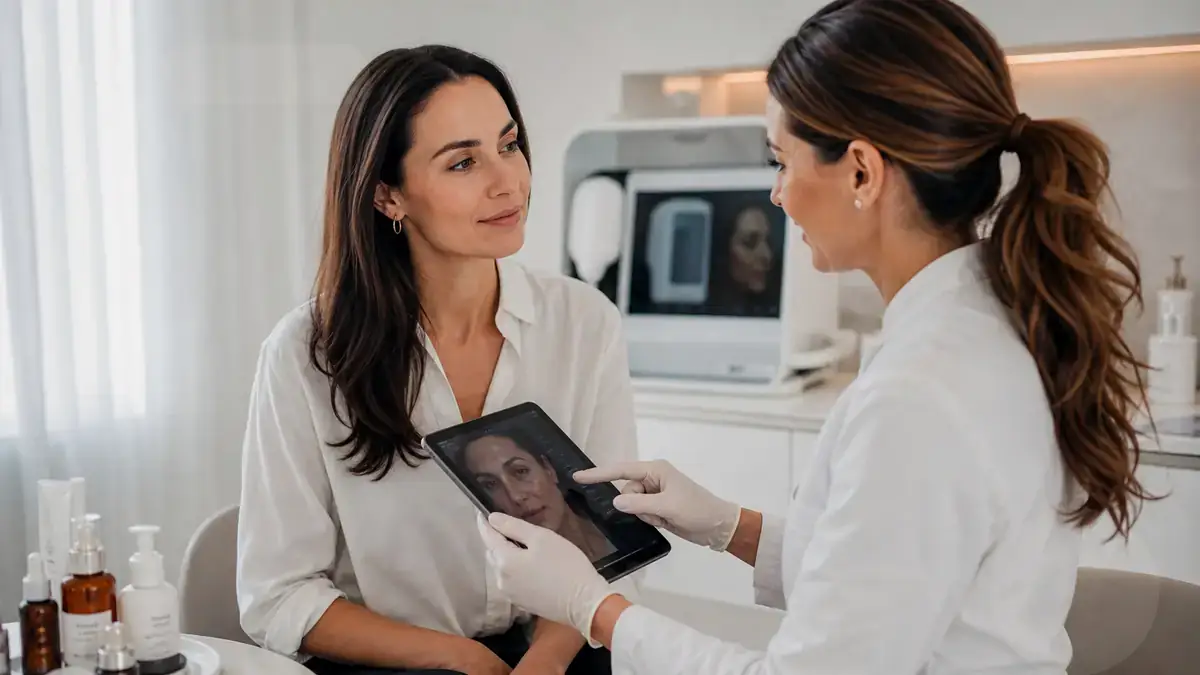
- Skin analysis – the practitioner assesses skin type and concerns
- Pre-treatment – at-home skincare for 2–4 weeks beforehand is often required (tretinoin, AHA)
- Cleansing and degreasing – thorough cleansing of the skin
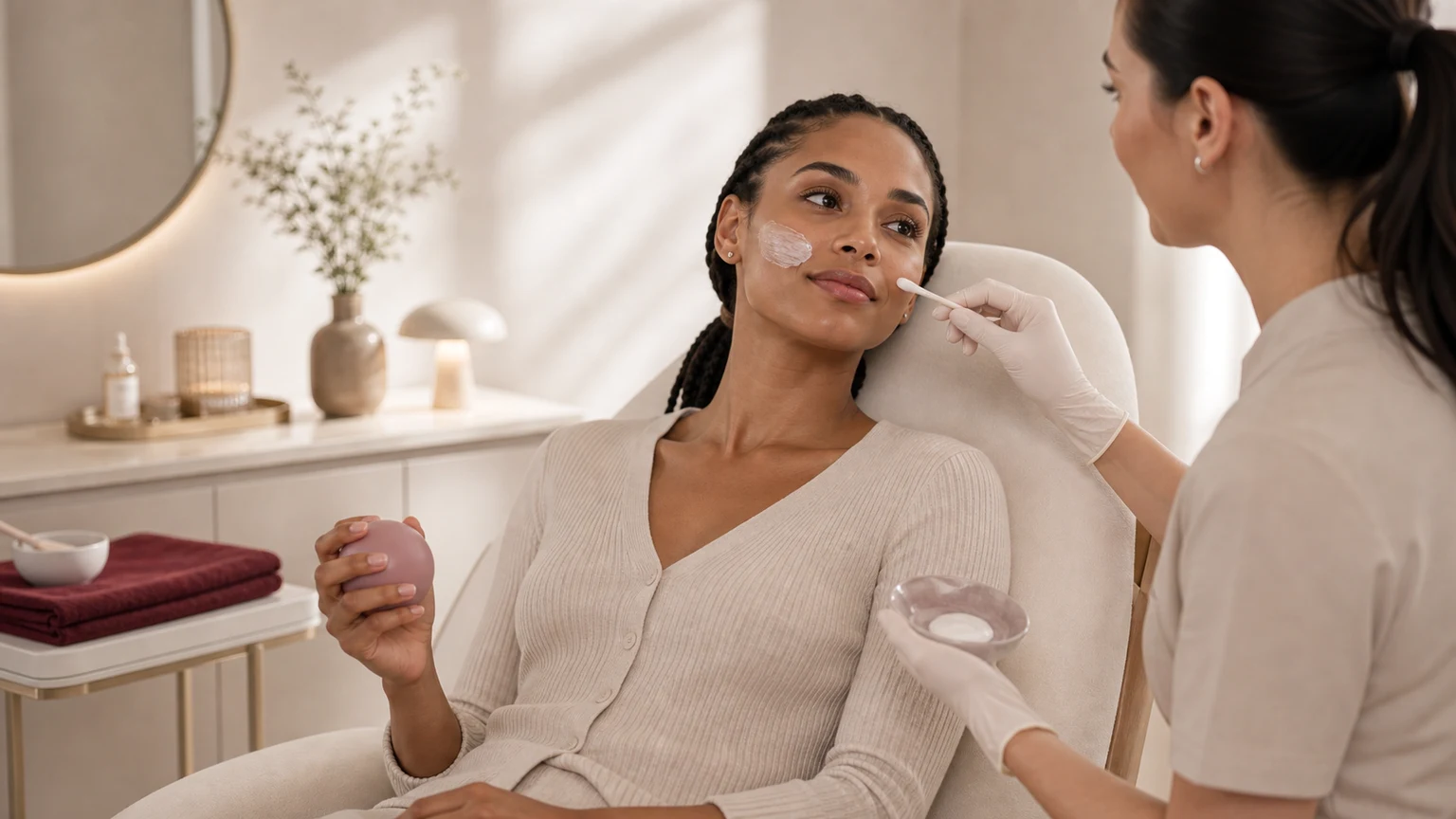
- Application – the peel solution is applied with a brush or cotton ball
- Contact time – varies from seconds to minutes
- Neutralisation (if necessary) – for certain peels
- Soothing mask and sun protection
Aftercare
Correct aftercare is crucial for the best results and for safety:
- Daily SPF 50 sun protection for at least 4 weeks
- Gentle cleansing – no scrubs or AHAs
- Moisturising – peptide or hyaluronic acid serum
- Do not pick peeling skin – it can lead to scarring
- Avoid saunas, the gym and bathing until the skin has fully healed
Risks and contraindications
Chemical peels are generally safe but carry specific risks:
- Post-inflammatory hyperpigmentation (more common in darker skin types)
- Burns from incorrect use
- Infection
- Scarring (rare)
- Allergic reaction
Peels are not recommended in cases of: active eczema, a herpes outbreak, isotretinoin treatment within the last 6 months, infections, or during pregnancy (certain types).
Skin types and peels
Darker skin types (Fitzpatrick III–VI) have a higher risk of pigment changes and should undergo milder peels under close supervision. Pre-treatment with skin-lightening products (hydroquinone, kojic acid) for 2–4 weeks is often recommended[2].