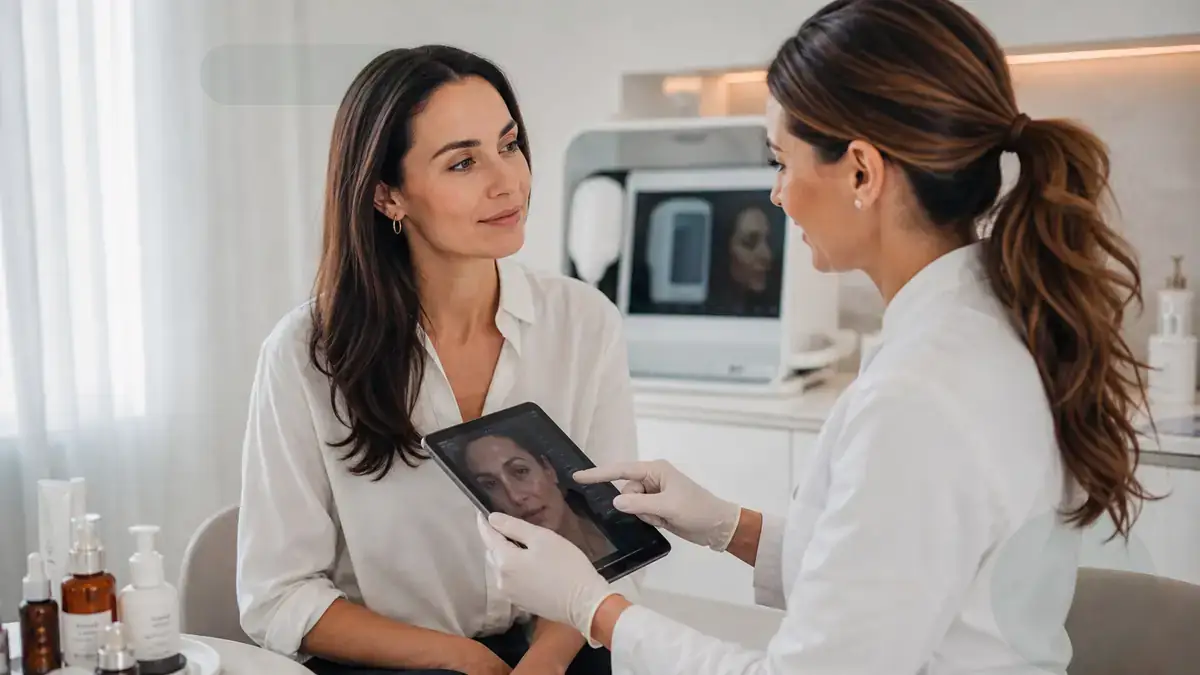
PRP stands for Platelet-Rich Plasma – blood plasma with a high concentration of platelets. The treatment is also known as the "vampire facial" because it uses the patient's own blood. It is a regenerative medical technique that has been used in orthopaedics and sports medicine for decades, but which has become increasingly popular in aesthetic medicine in recent years[1].
What does PRP contain?
Plasma normally contains about 200,000 platelets per microlitre. By centrifuging the blood, the concentration can be increased 3–7 times. The platelets are packed with growth factors that play a key role in the body's healing processes:
- PDGF (Platelet-Derived Growth Factor)
- TGF-β (Transforming Growth Factor)
- VEGF (Vascular Endothelial Growth Factor)
- EGF (Epidermal Growth Factor)
- IGF (Insulin-like Growth Factor)
When these growth factors are injected into or applied to the skin, they stimulate:
- The formation of new collagen and elastin
- Improved microcirculation
- Cell renewal
- Tissue regeneration
- Blood sample: 10–30 ml of blood is drawn from the crook of the arm
- Centrifugation: The blood is spun in a special centrifuge for 8–15 minutes, which separates the plasma from the red blood cells
- Processing: The PRP fraction is extracted (it can be combined with calcium chloride for activation)
- Treatment: The PRP is injected or applied with microneedling
The whole process takes 60–90 minutes.
Two methods of administration
1. Direct injection
PRP is injected with a fine needle into specific areas – often the tear trough, cheeks, jawline or scalp.
2. Microneedling + PRP (vampire facial)
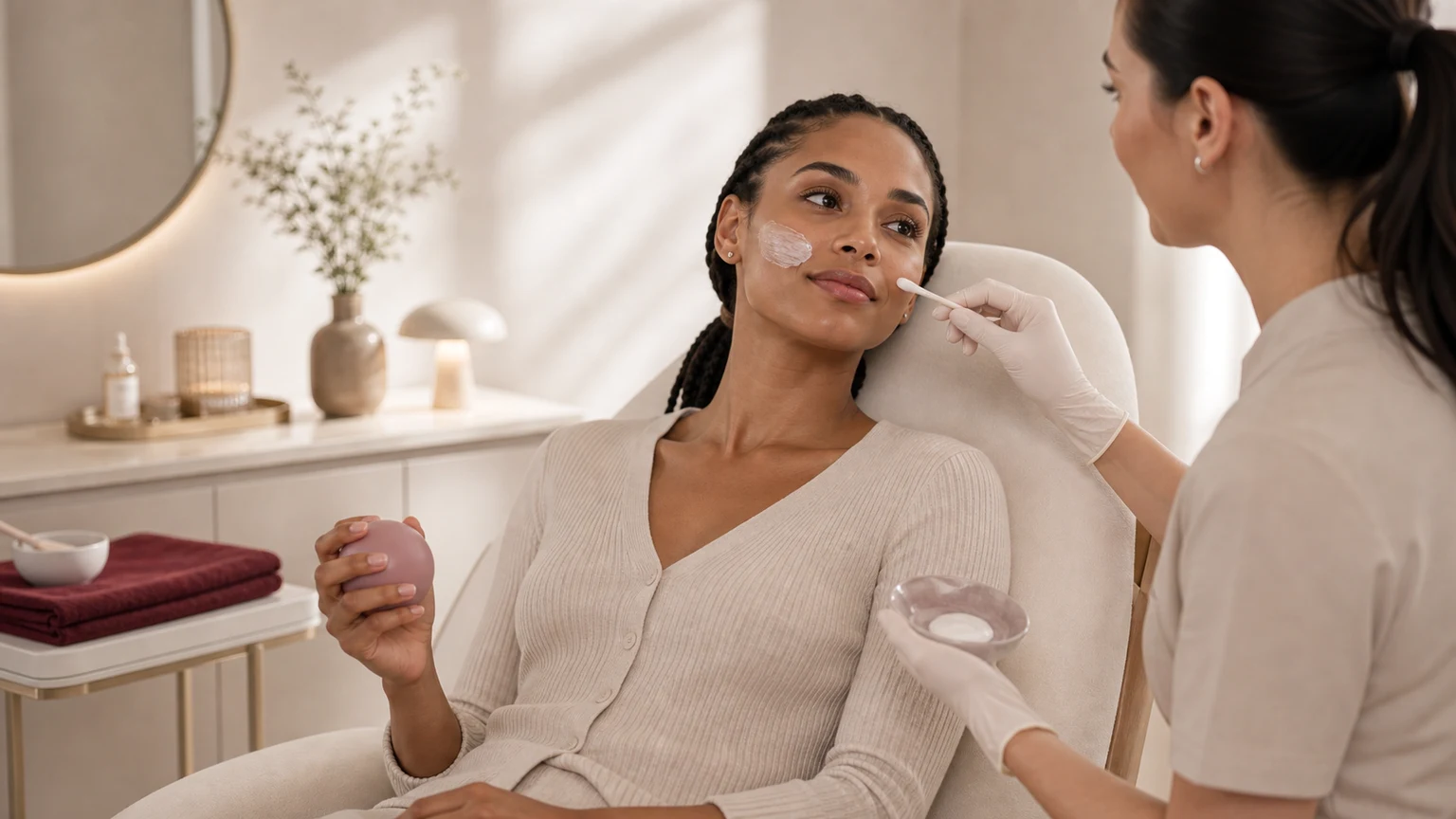
First, microneedling is performed to create microchannels in the skin. The PRP is then applied directly to the skin, which allows the growth factors to be absorbed more deeply.
What is treated with PRP?
Skin rejuvenation
- Fine lines and wrinkles
- Skin quality and radiance
- Hyperpigmentation
- Acne scars
- Tear trough (dark circles under the eyes)
Hair loss
PRP is one of the most evidence-based non-surgical treatments for androgenetic hair loss. Studies show improved hair thickness and renewed hair growth after 3–4 sessions[2].
Other uses
- Stretch marks
- Wounds and scars
- Certain skin conditions such as rosacea
When are the results visible?
Because PRP stimulates the body's own healing, the effect is gradual:
- Immediately: Slight plumping and hydration
- 2–4 weeks: Improved skin quality starts to show
- 2–3 months: A more marked result
- 6 months: Full effect with collagen build-up
Treatment protocol
For optimal effect, the following is recommended:
- Skin rejuvenation: 3 sessions 4–6 weeks apart, then maintenance 1–2 times a year
- Hair loss: 4–6 sessions 1 month apart
How long do the results last?
The effect of PRP normally lasts 9–18 months, depending on:
- The number of initial treatments
- The skin's starting condition
- Lifestyle factors (sun, smoking, diet)
- Maintenance treatments
Risks and side effects
Because PRP is your own blood, the risk of allergic reactions is virtually non-existent. Common, transient side effects:
- Redness and swelling (1–3 days)
- Bruising at the injection sites
- Mild tenderness
- Temporary itching
Serious side effects are extremely rare. PRP is not recommended in cases of: bleeding disorders, certain autoimmune diseases, active cancer, infection in the area, or pregnancy.
What is PRF?
PRF (Platelet-Rich Fibrin) is a newer variant of PRP. The differences:
- It is centrifuged at a lower speed
- It contains fibrin (a structural matrix)
- It releases growth factors more slowly and over a longer period
- It is considered to give a more natural and longer-lasting result