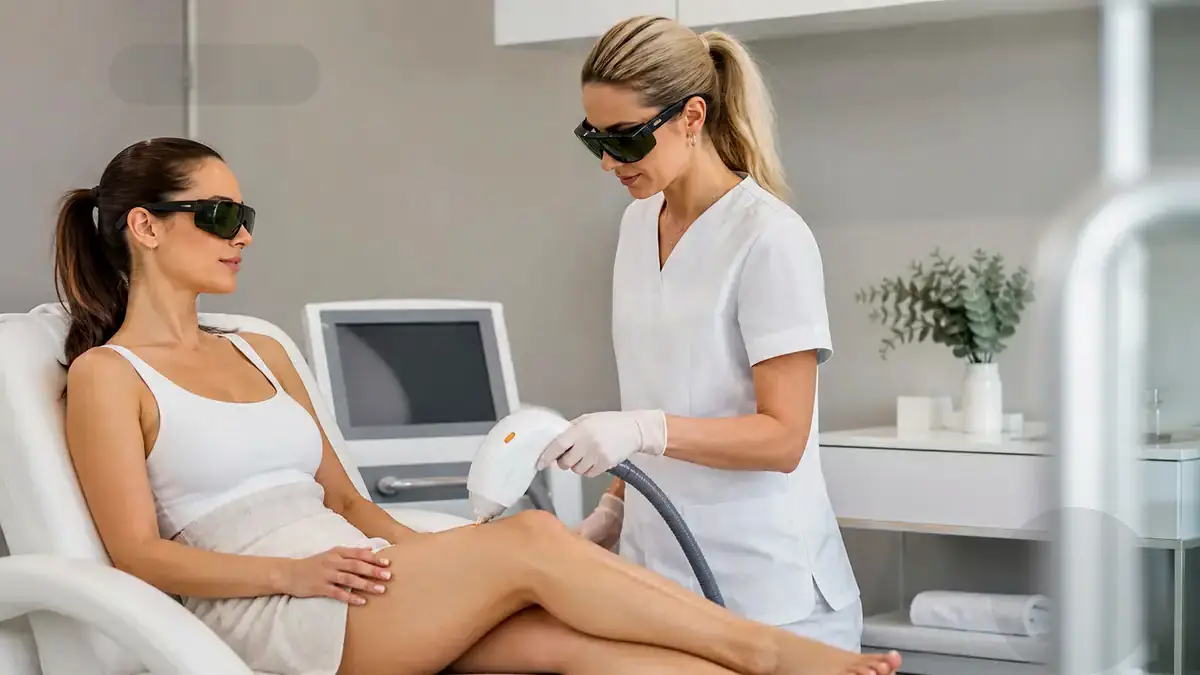
Most laser treatments are downright unsuitable in summer. It comes down to physics — lasers target pigment (melanin), and tanned skin has more pigment to hit.
Why a tan + laser = a problem
When treating pigment spots or removing hair, the laser energy is absorbed by melanin. If the surrounding skin also has a high melanin content (a tan), it absorbs the energy too, which can cause:
- Hyperpigmentation (permanent dark spots)
- Hypopigmentation (permanent light spots)
- Burns and blisters
- Scarring
Laser types — summer safety
| Laser | Summer | Minimum time without sun |
|---|---|---|
| IPL | ❌ Prohibited on tanned skin | 4–6 weeks |
| Alexandrite (hair removal) | ❌ High risk | 4 weeks |
| Fractional ablative (CO2) | ❌ No | 6 weeks |
| Fractional non-ablative | ⚠️ Only with ultra-strict sun protection | 4 weeks |
| Nd:YAG | ⚠️ OK on darker skin, with caution | 2–4 weeks |
When is laser season in Sweden?
October–March. No tan, low UV index. Start a course of treatment in Sept–Oct, finish in March–April, avoid the sun.
Laser protocol
- 4 weeks without direct sun before
- 4–6 weeks without direct sun after
- SPF50 throughout the period
- No self-tanner for 2 weeks before
- No sunbeds — ever, for the treated area
Melasma — special warning
Melasma is a form of pigmentation that is often made worse by the wrong laser. Summer sun + laser + melasma-prone skin = a recipe for chronic hyperpigmentation. Seek specialist treatment, not "standard IPL".